

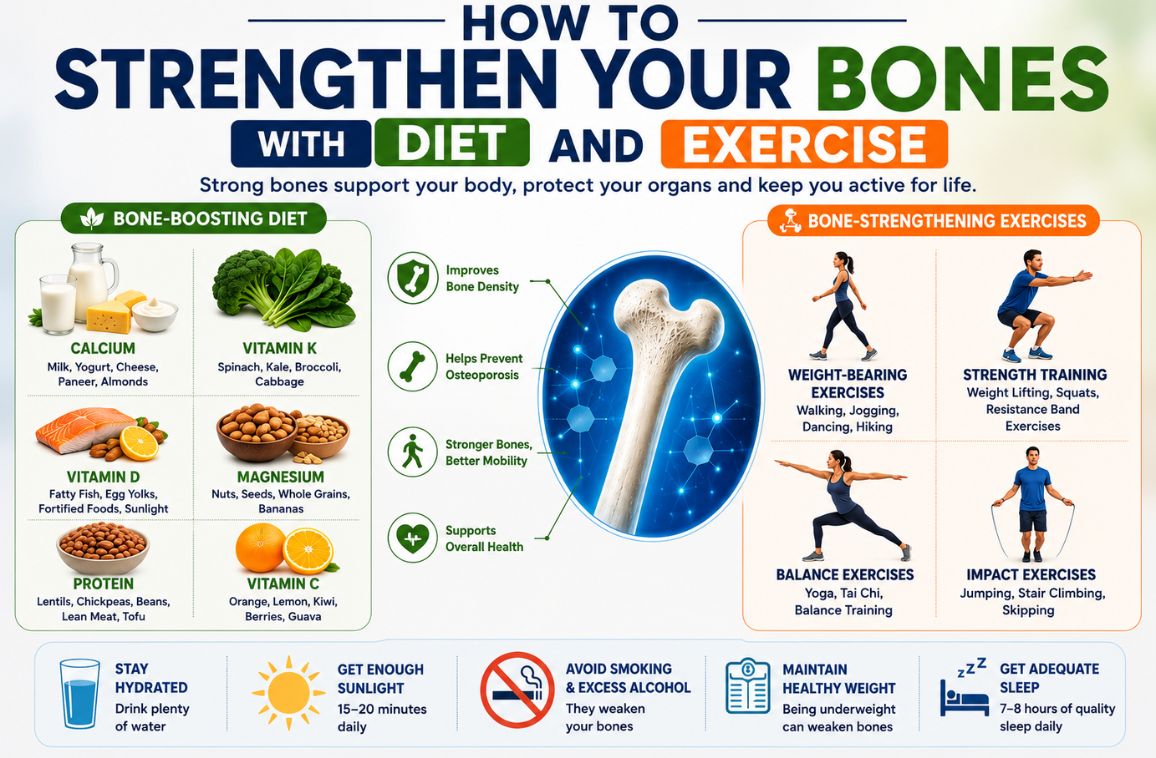
Strong bones are essential for overall health, mobility, and independence at every stage of life. Bones protect vital organs, support body structure, and allow movement. However, poor nutrition, inactivity, and aging can weaken bones and increase the risk of fractures. The good news is that with the right combination of diet and exercise, you can significantly improve bone health. Below are clear and practical points to help you strengthen your bones naturally and effectively.
Table of Contents
1. Understand Why Bone Health Matters
Bones are living tissues that constantly break down and rebuild. During childhood and early adulthood, bone formation happens faster. As we age, bone loss can exceed bone formation, leading to weaker bones. Maintaining strong bones reduces the risk of osteoporosis, joint pain, and fractures. Healthy bones also improve posture, balance, and physical performance.
2. Include Calcium-Rich Foods Daily
Calcium is the most important mineral for building and maintaining strong bones. A lack of calcium can lead to brittle bones over time. Include calcium-rich foods in your daily diet, such as milk, curd, cheese, paneer, sesame seeds, almonds, ragi, broccoli, and leafy green vegetables. Adults should aim for consistent calcium intake rather than depending on occasional supplements.
3. Don’t Ignore Vitamin D Intake
Calcium absorption depends on vitamin D, making it equally important for bone strength. Without sufficient vitamin D, the body cannot properly use calcium. Spend 15 to 20 minutes in morning sunlight to naturally boost vitamin D levels. You can also include foods like egg yolks, fortified milk, mushrooms, and fatty fish. In some cases, supplements may be recommended by a healthcare professional.
Also read, Daily Detox Tips for a Cleaner, Healthier Body.
4. Add Protein for Bone Support
Protein plays a vital role in maintaining bone structure and muscle strength. Include adequate protein from sources like pulses, lentils, eggs, dairy products, nuts, seeds, and lean meats. Balanced protein intake supports bone repair and reduces the risk of bone loss, especially in older adults.
5. Limit Bone-Weakening Foods
Certain foods can weaken bones when consumed excessively. High salt intake causes calcium loss through urine. Too much caffeine and carbonated drinks may interfere with calcium absorption. Highly processed foods and sugary snacks provide little nutritional value and negatively affect bone density. Moderation is key to protecting long-term bone strength.
6. Practice Weight-Bearing Exercises
Physical activity is essential for strong bones. Weight-bearing exercise forces bones to work against gravity, stimulating bone formation. Activities such as walking, jogging, stair climbing, dancing, yoga, and strength training are highly effective. Aim for at least 30 minutes of weight-bearing activity most days of the week for optimal results.
7. Strength Training Improves Bone Density
Resistance exercises using body weight, resistance bands, or light weights help build bone mass and muscle strength. Squats, lunges, push-ups, and lifting weights improve balance and reduce the risk of falls. Start slow and increase intensity gradually to avoid injury.
8. Maintain Proper Posture and Balance
Good posture reduces pressure on bones and joints. Practicing posture-focused exercises like yoga and stretching improves spinal alignment and prevents bone strain. Balance exercises such as standing on one leg or slow walking reduce fall risk, especially in older adults.

9. Avoid Smoking and Excess Alcohol
Smoking reduces blood supply to bones and interferes with calcium absorption. Excess alcohol consumption weakens bones and increases fracture risk. Avoiding these habits is one of the most effective ways to protect bone health naturally.
10. Stay Physically Active Throughout Life
Bone strength is not built overnight. Consistency matters more than intensity. Staying active throughout life helps preserve bone mass and flexibility. Even simple daily movements like walking, stretching, and light exercises can make a long-term difference.
11. Monitor Bone Health Regularly
Regular health checkups help identify early signs of bone loss. Bone density tests may be recommended for people with risk factors such as aging, family history, or hormonal changes. Early detection allows timely lifestyle adjustments and treatment if needed.
Conclusion
Strong bones are built through a combination of proper nutrition, regular exercise, and healthy habits. By consuming calcium-rich foods, maintaining vitamin D levels, practicing weight-bearing exercise, and avoiding harmful habits, you can protect your bones for life. Investing in bone health today ensures better mobility, strength, and independence in the future.