

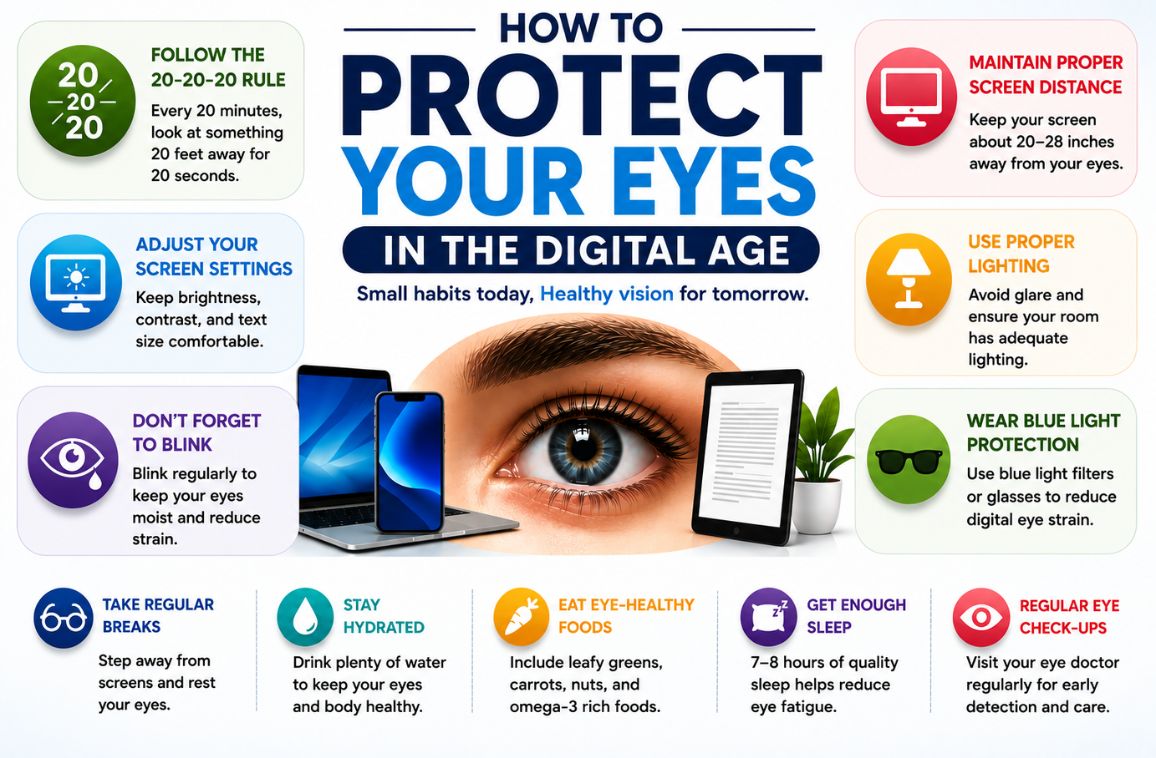
In today’s digital world, screens have become a constant part of daily life. From smartphones and laptops to tablets and televisions, most people spend several hours each day staring at digital devices. While technology improves productivity and connectivity, excessive exposure can negatively affect eye health. Many people experience discomfort, headaches, and blurred vision due to prolonged screen use. Protecting your eyes is essential to maintaining long-term vision and overall well-being. By following simple and practical habits, you can reduce damage and keep your eyes healthy in the digital age.
Table of Contents
1. Understand the Impact of Digital Screens
Extended screen use can cause a condition known as digital eye strain. This happens when the eyes work harder than usual to focus on screens for long periods. Symptoms include dryness, irritation, redness, headaches, and difficulty concentrating. Screens also emit blue light, which can penetrate deep into the eyes and cause fatigue. Being aware of these effects is the first step toward protecting your vision and preventing long-term discomfort.
2. Follow the 20-20-20 rule
One of the easiest ways to reduce eye strain is by following the 20-20-20 rule. Every 20 minutes, take a break and look at something 20 feet away for at least 20 seconds. This simple habit relaxes the eye muscles and reduces fatigue caused by constant focusing. Setting reminders or using apps can help you stay consistent, especially during long working hours.
3. Adjust Screen Brightness and Contrast
Improper screen brightness can strain your eyes. If your screen is too bright or too dark, your eyes must work harder to adjust. Match your screen brightness with the surrounding light in your room. Increasing text size and adjusting contrast can also make reading easier. Proper screen settings significantly improve comfort and reduce unnecessary stress on your eyes.
Also read, Healthy Snacking Ideas to Keep You Energized.
4. Maintain Proper Screen Distance and Position
The position of your screen plays a crucial role in eye protection. Keep your screen at arm’s length, approximately 20 to 24 inches away from your eyes. The centre of the screen should be slightly below eye level, allowing your eyes to look downward naturally. This posture reduces exposure to blue light and prevents neck and eye strain caused by improper angles.
5. Blink Often and Keep Eyes Moist
People blink less frequently when using digital devices, leading to dry and irritated eyes. Make a conscious effort to blink regularly to keep your eyes moist. If dryness persists, use lubricating eye drops after consulting a professional. Staying hydrated also helps maintain natural moisture levels in your eyes and supports overall eye health.

6. Reduce Blue Light Exposure
Excessive blue light exposure can disrupt sleep patterns and increase eye fatigue. Enable blue light filters or night mode on your devices, especially during evening hours. You can also consider blue light-blocking glasses if your work involves extended screen time. Limiting blue light exposure protects your eyes and improves sleep quality.
7. Improve Lighting in Your Environment
Poor lighting forces your eyes to strain more while viewing screens. Avoid using devices in dark rooms, as the contrast between screen brightness and darkness increases discomfort. Use soft, ambient lighting and avoid glare from windows or overhead lights. Proper lighting reduces eye strain and enhances visual comfort throughout the day.
8. Take Regular Screen Breaks
Continuous screen use without breaks increases eye fatigue and reduces focus. Schedule short breaks every hour to rest your eyes and body. Stand up, stretch, or walk around to improve blood circulation. Reducing overall screen time whenever possible helps prevent long-term damage and keeps your eyes refreshed.
9. Maintain a Nutrient-Rich Diet
A healthy diet supports strong vision and eye function. Include foods rich in vitamin A, omega-3 fatty acids, lutein, and zinc. Carrots, leafy greens, eggs, fish, and nuts contribute to better eye health. Proper nutrition strengthens eye tissues and reduces the risk of vision problems caused by aging and excessive screen exposure.
10. Get Regular Eye Checkups
Routine eye examinations are essential, even if you don’t notice vision problems. An eye specialist can detect early signs of strain or vision changes and recommend corrective measures. Regular checkups ensure that your eyes remain healthy and adapt well to increasing digital demands.
Conclusion
Protecting your eyes in the digital age requires consistent habits and awareness. By managing screen time, reducing digital eye strain, adjusting screen settings, limiting blue light exposure, and maintaining good nutrition, you can safeguard your vision effectively. Small daily changes can make a big difference in preserving eye health and ensuring comfort in a screen-driven world. Taking care of your eyes today helps maintain clear vision and productivity for years to come.