

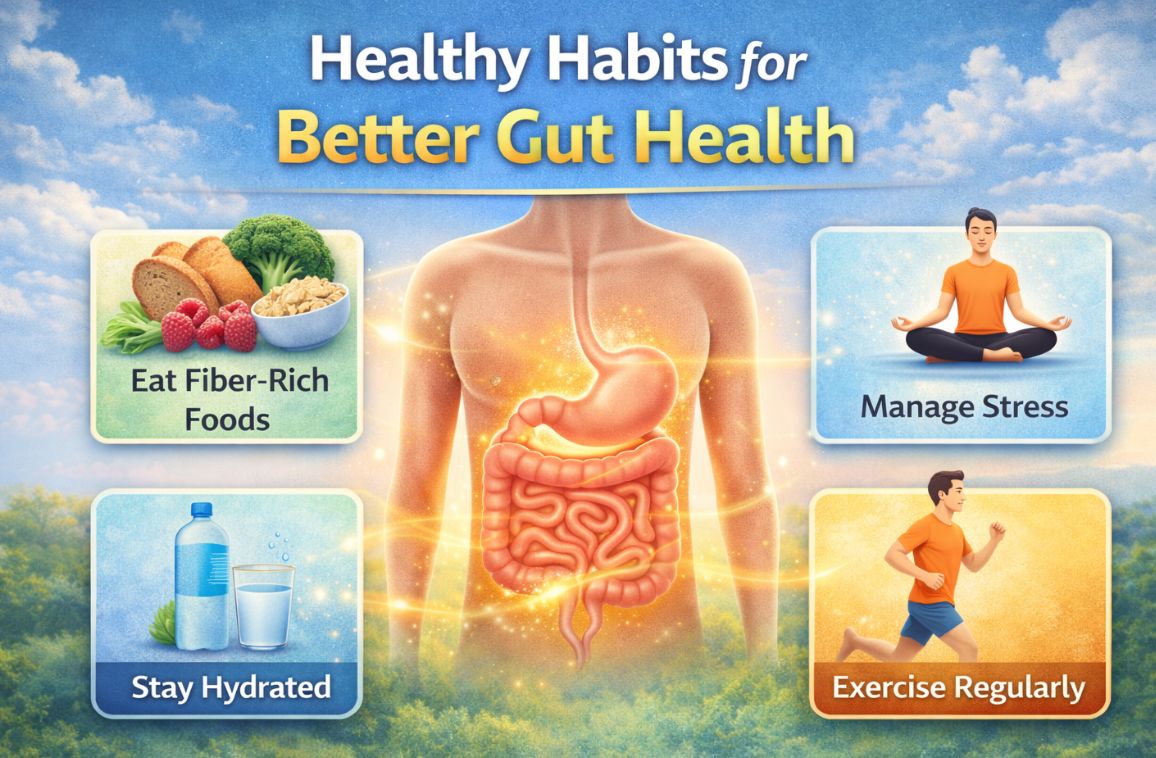
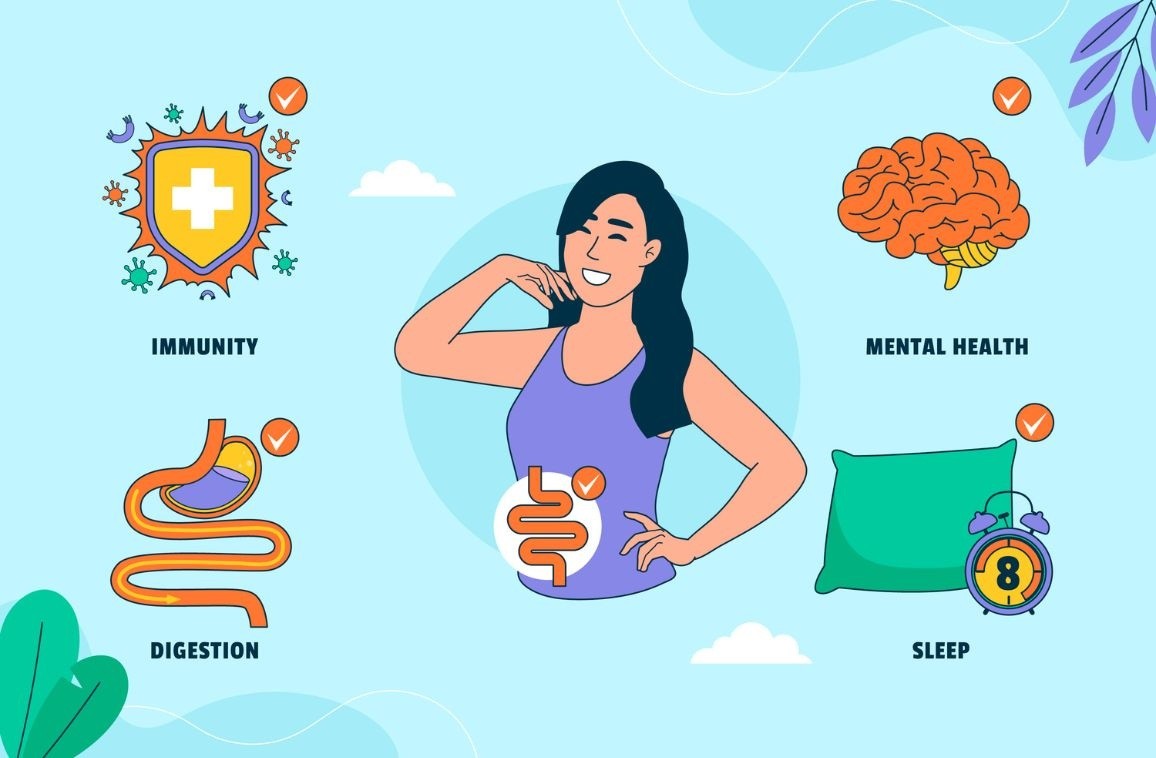
Gut health plays a crucial role in overall well-being, influencing digestion, immunity, energy levels, and even mental health. A healthy gut supports nutrient absorption, protects against harmful bacteria, and maintains balance in the digestive system. Poor gut health can lead to bloating, constipation, fatigue, and weakened immunity. By adopting simple daily habits, you can improve your digestive health and enjoy a more active and healthier life. Below are clear and practical habits that support better gut health naturally.
Table of Contents
1. Eat a Fiber-Rich, Balanced Diet
A balanced diet is the foundation of good gut health. Fiber feeds the good bacteria in your intestines and helps maintain regular bowel movements. Include whole grains, fruits, vegetables, legumes, and seeds in your meals. Foods such as oats, apples, carrots, beans, and leafy greens support digestion and prevent constipation. Avoid excessive processed foods, as they disrupt gut balance and slow digestion.
2. Include Probiotic and Prebiotic Foods
Probiotics are beneficial bacteria that improve gut health, while prebiotics act as food for these bacteria. Add probiotic-rich foods like yogurt, curd, kefir, and fermented vegetables to your daily diet. Prebiotic foods include bananas, garlic, onions, and asparagus. Together, they help maintain a healthy gut microbiome and strengthen immunity.
3. Stay Properly Hydrated
Drinking enough water is essential for smooth digestion. Hydration helps break down food, absorb nutrients, and soften stool, preventing constipation. Aim to drink at least eight glasses of water daily. Herbal teas and infused water can also support digestive health. Limiting sugary drinks and excess caffeine helps reduce irritation in the digestive tract.
4. Practice Mindful Eating
Eating in a hurry or while stressed can disturb digestion. Practice mindful eating by chewing food slowly and paying attention to portion sizes. Avoid overeating, as it puts pressure on your digestive system. Eating at regular times each day helps your gut function more efficiently and reduces bloating or discomfort.
Also read, Boost Your Metabolism Naturally with These Simple Tips.
5. Manage Stress Effectively
Chronic stress negatively affects gut health and digestion. The gut and brain are closely connected, so mental stress often leads to digestive issues. Practicing stress management techniques such as deep breathing, meditation, yoga, or spending time outdoors can improve gut function. Even short relaxation breaks during the day help restore balance.
6. Get Enough Quality Sleep
Sleep plays an important role in maintaining digestive health. Poor sleep disrupts gut bacteria and slows digestion. Aim for seven to eight hours of uninterrupted sleep each night. Maintain a consistent sleep schedule and avoid heavy meals before bedtime to support a healthy digestive cycle.
7. Exercise Regularly
Regular physical activity supports gut movement and prevents digestive discomfort. Simple exercises such as walking, stretching, cycling, or yoga improve blood flow to the digestive organs. Aim for at least thirty minutes of moderate exercise most days of the week. Staying active also helps reduce stress and supports a healthy lifestyle.
8. Limit Harmful Habits
Smoking, excessive alcohol consumption, and frequent use of painkillers can damage the gut lining and disrupt digestion. Reducing or avoiding these habits allows your digestive system to heal and function properly. Choose healthier alternatives and practice moderation to protect long-term gut health.
9. Maintain Hygiene and Food Safety
Good hygiene supports digestive health by preventing infections. Wash hands before meals, consume freshly prepared food, and store food properly. Avoid contaminated water and undercooked foods, as they can harm the digestive system and lead to gut infections.
10. Listen to Your Body Signals
Pay attention to how your body responds to different foods and routines. Symptoms like bloating, acidity, or discomfort are signs your gut needs care. Keeping a simple food journal can help identify triggers. Making small adjustments based on these signals supports long-term digestive health and encourages a more balanced and mindful eating approach.
Consistency is key to gut wellness.
Conclusion
Maintaining a healthy gut does not require drastic changes. Small and consistent habits can lead to significant improvements in digestion, immunity, and overall wellness. By following a balanced diet, staying hydrated, managing stress, and adopting a healthy lifestyle, you can support your gut naturally. Prioritizing digestive health helps your body function better and improves your quality of life in the long run.